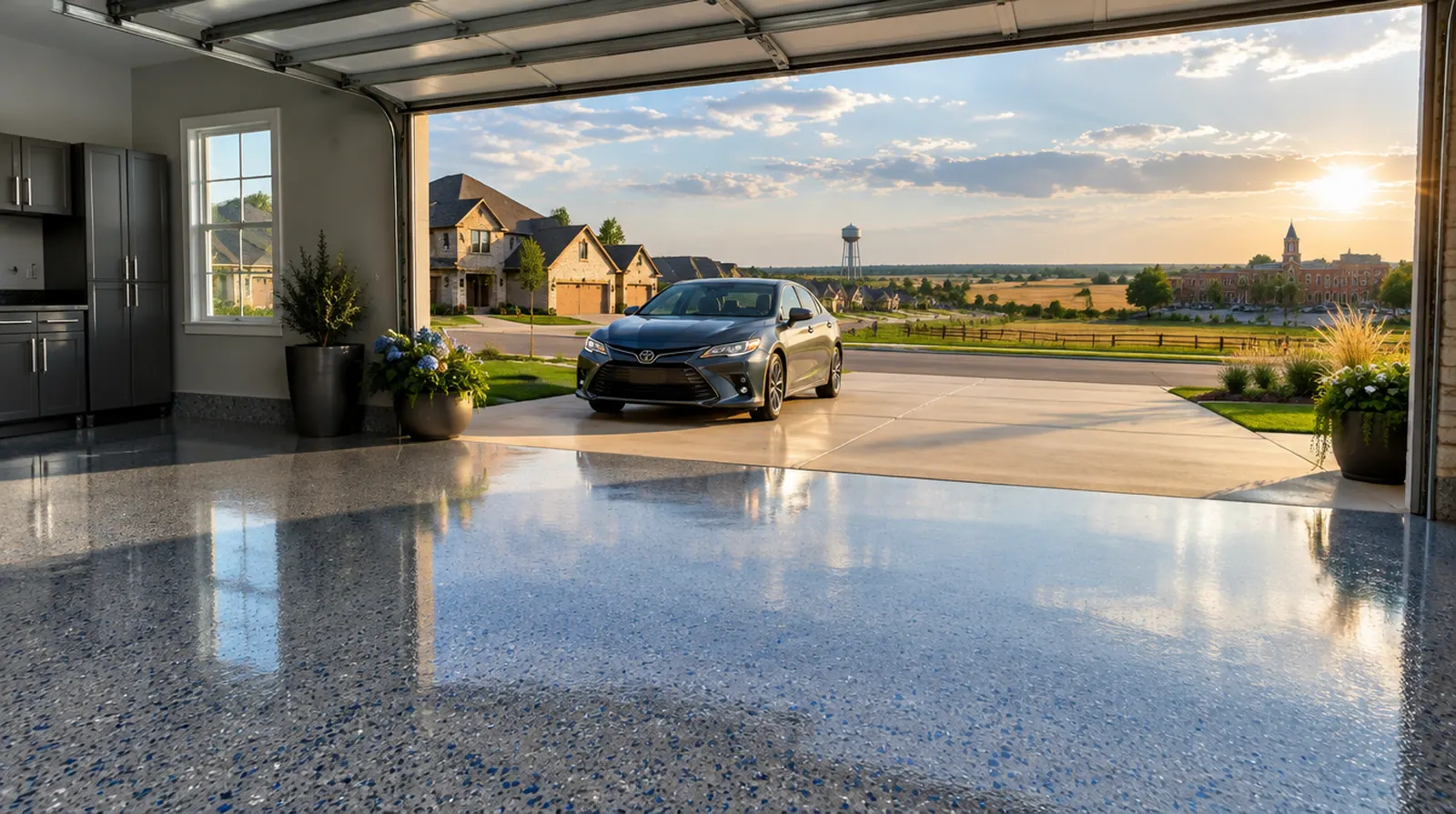
What polyaspartic is
Polyaspartic is a type of aliphatic polyurea. It was developed for bridges and industrial structures that needed tough, fast-curing protection, and it has become one of the best options for residential garages. Unlike standard epoxy, it does not yellow in sunlight, it cures in hours instead of days and it handles the high temperatures common in garages here. It also bonds well and stays flexible enough to tolerate the slight movement typical of slabs on clay soil.
Why it suits north Texas garages
Summer temperatures inside a closed garage can climb past 110 degrees. Many coatings soften or lose gloss in that heat. Polyaspartic stays hard, resists hot tire pickup and holds its color even when the garage door is open to the afternoon sun for hours. Because it cures quickly, we can install it in warmer months without the long waits that slow epoxy down.
The one-day garage
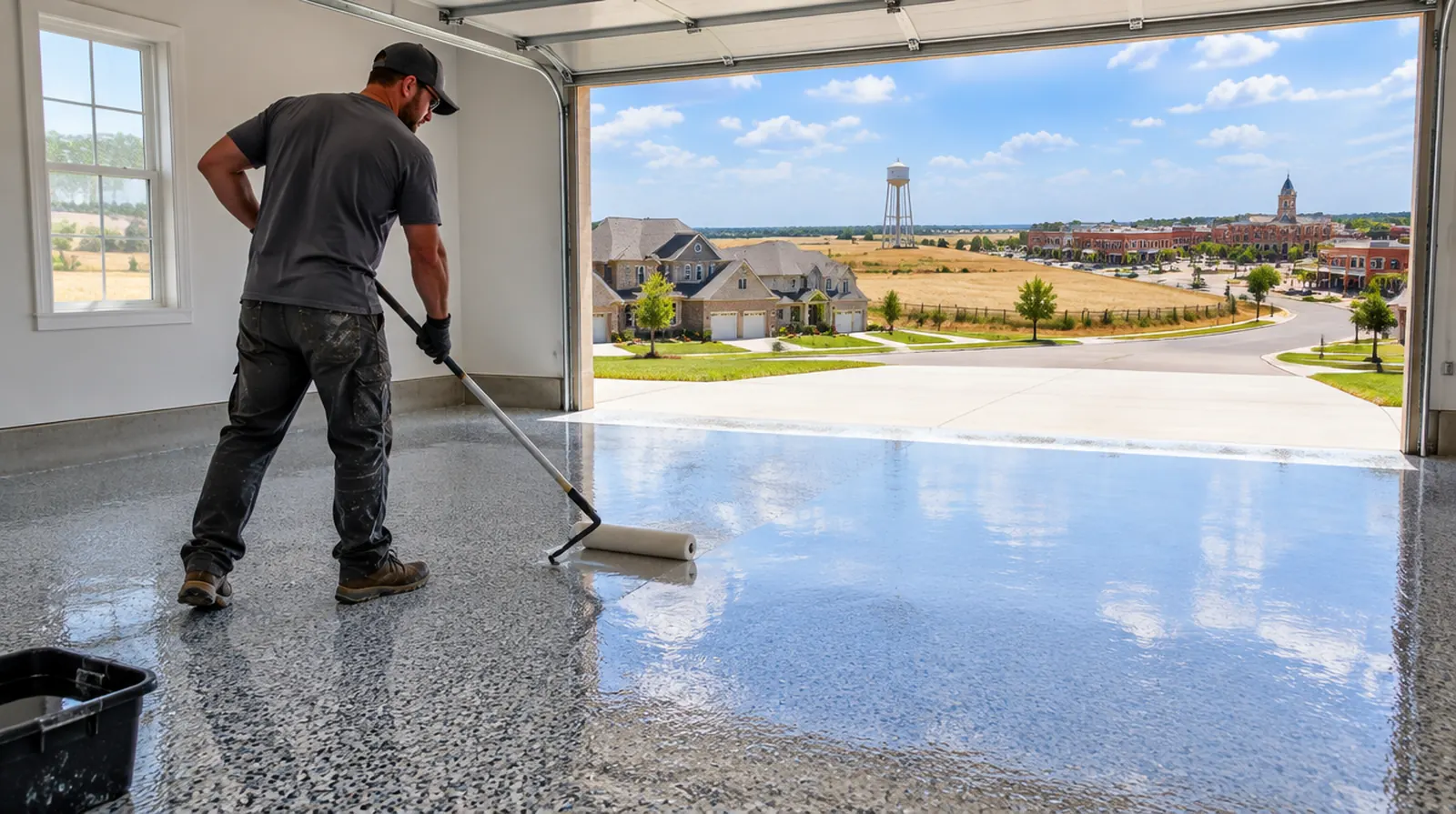
With polyaspartic, many two-car garages are finished in a single day. We grind and repair in the morning, apply the base coat and flake, then scrape and topcoat by afternoon. You can usually walk on the floor that evening and park within a day or two. That is a big advantage for families who cannot go without their garage for long.
Polyaspartic versus epoxy
Epoxy is excellent for building thickness and bonding to concrete, and it costs less per gallon. Polyaspartic excels at UV stability, abrasion resistance and cure speed. That is why many of our systems combine both: an epoxy primer or base for adhesion and build, and a polyaspartic topcoat for wear and sun resistance. In some cases we use polyaspartic throughout. We will explain the reasons for our recommendation in your quote.
Preparation is non-negotiable
Fast-curing material gives little room for error, so preparation has to be thorough. We diamond grind every floor to the profile the manufacturer requires, repair cracks and pits and test moisture. Skipping these steps is the most common reason fast-cure coatings fail, and it is a step we never shortcut.
Outdoor uses
Because it resists UV, polyaspartic can be used on covered patios, porches, pool deck sections and outdoor kitchens. We often add a fine aggregate for traction on wet surfaces. It is a good alternative to paint or sealers that fade and peel within a couple of summers.
Finishes and colors
Polyaspartic can be clear over flake or tinted in solid colors. We can produce glossy or satin finishes and adjust texture for slip resistance. Satin finishes hide light scratches and dust a bit better than high gloss.
Installing in hot weather
Polyaspartic cures faster as temperatures rise, so we plan summer installs carefully. We start early in the morning, mix in smaller batches and work in sections so the material goes down evenly. When needed, we use slower-curing formulations designed for high heat.
Durability and coverage
When installed correctly over a properly prepared slab, a polyaspartic system can last many years. We explain coverage and care requirements in writing so you know what to expect.
Price considerations
Polyaspartic materials cost more than epoxy, but the faster install can offset part of that. Your final price depends on garage size, crack repairs, flake choice and whether we combine epoxy and polyaspartic layers. We itemize everything.
Simple maintenance
Sweep or blow out debris, rinse with water and use a pH-neutral cleaner for stubborn spots. Avoid dragging sharp metal objects, and place pads under stands. The surface resists most automotive fluids and lawn chemicals.
Does polyaspartic smell?
Some formulas have an odor during application that fades quickly as it cures.
Can it go over an old coating?
Only if the old coating is well bonded; otherwise we remove it first.
How soon can I park?
Often within 24 to 48 hours.
Get your garage back fast
Contact us to schedule a polyaspartic quote.
to get a polyaspartic quote.
Call (469) 202-5070 for a free estimate.