What polishing does
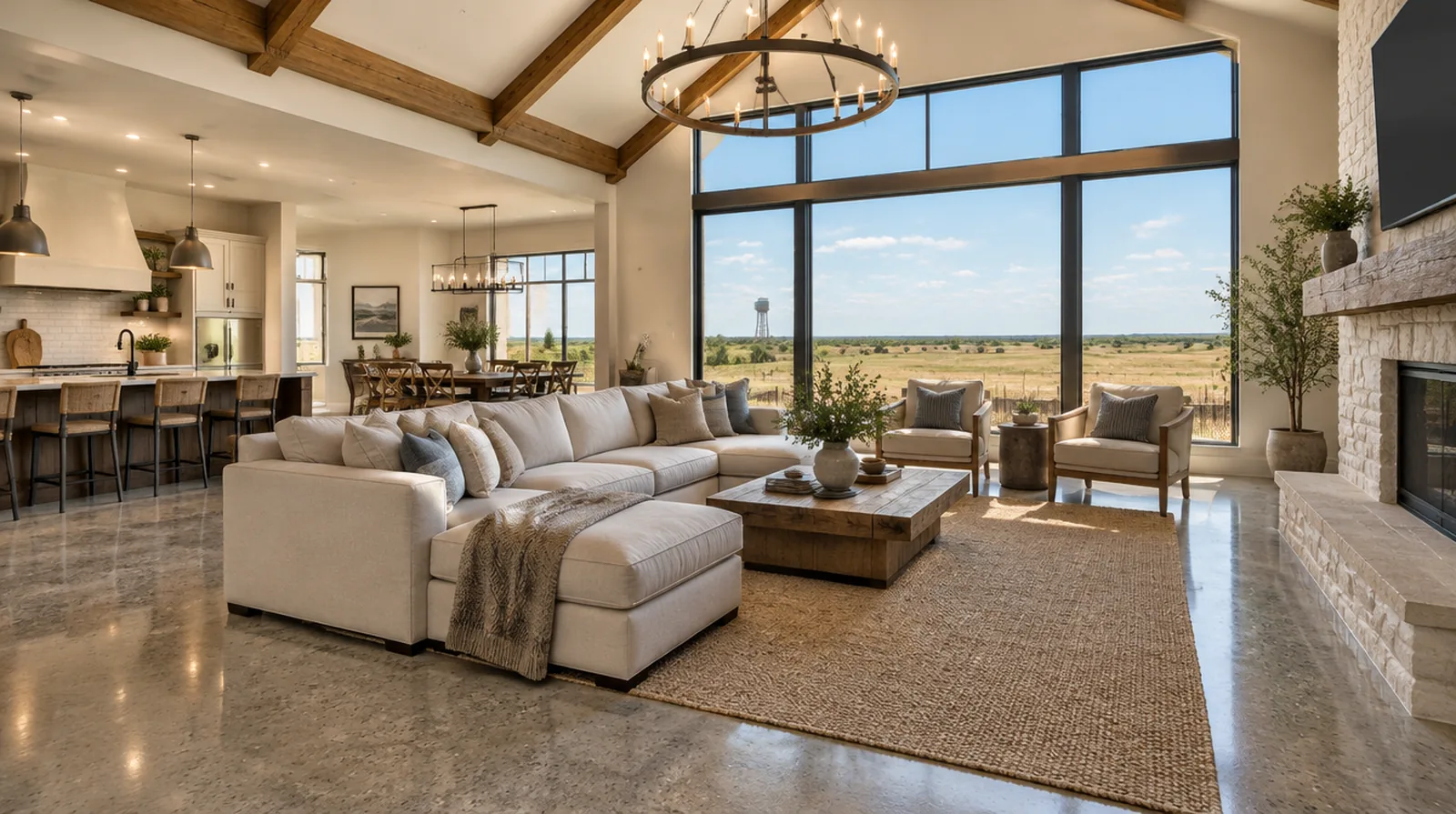
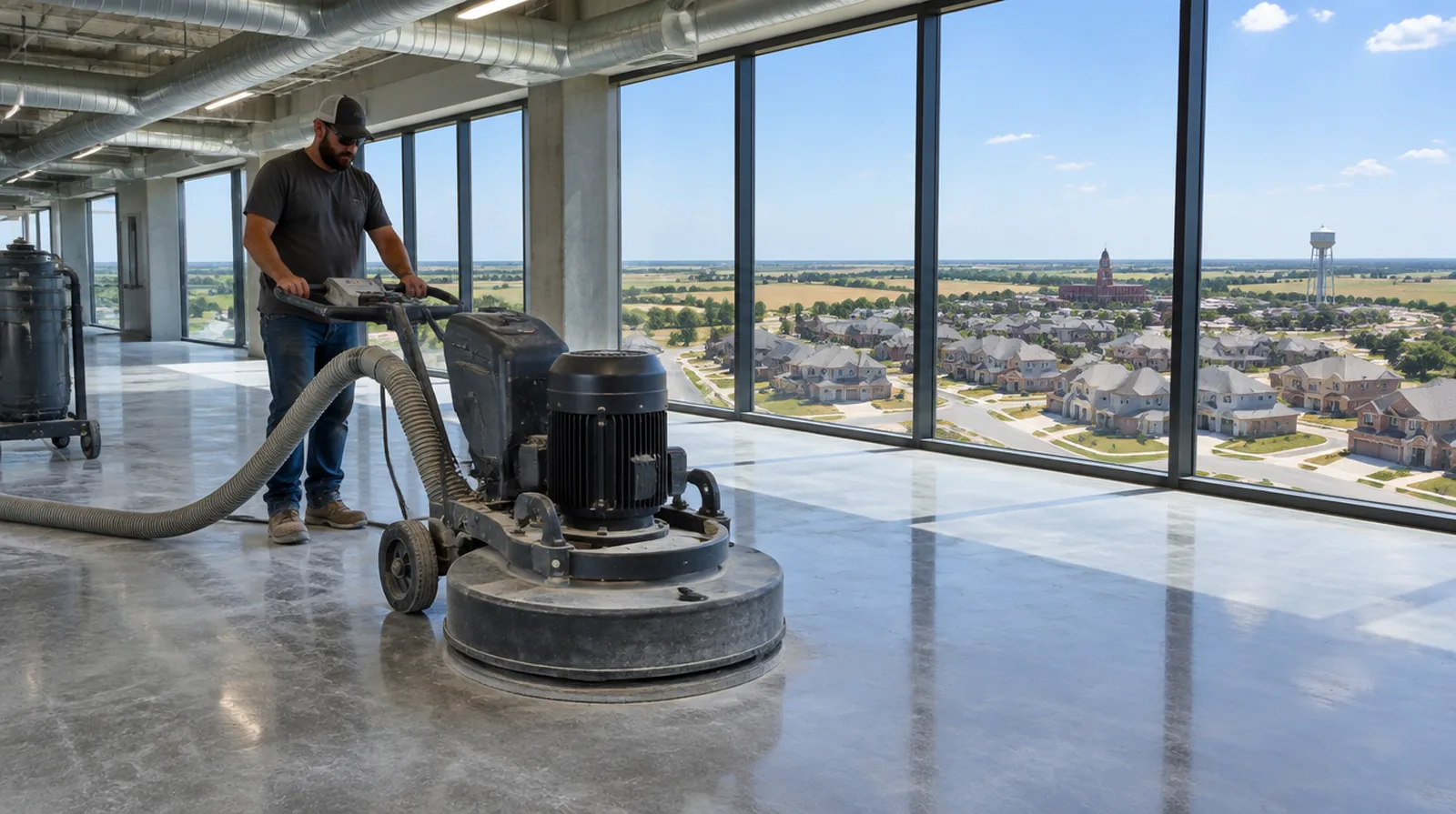
Polishing turns the concrete itself into the floor. We grind the surface with progressively finer diamond tools, apply a chemical densifier that hardens the concrete, and keep polishing until it reaches the sheen you want. There is no coating to peel. The result is a hard, dust-free surface that reflects light and holds up to foot traffic, furniture and equipment for years.
Popular in new homes
Modern farmhouse and contemporary designs are common in new neighborhoods here, and polished concrete fits those styles well. It pairs nicely with wood, steel and stone, stays cool underfoot in summer and works great with radiant heating. It is also a good choice for families with pets, because it does not scratch as easily as wood or trap hair like carpet.
Finish levels
We describe polished concrete in terms of sheen and aggregate exposure. A low sheen looks matte and natural. A medium sheen gives a soft satin glow. A high sheen reflects light almost like glass. For aggregate, we can keep just the cream layer for a uniform look, lightly expose fine sand or grind deeper to reveal stones. We can show samples of each.
Planning for new construction
The best polished floors are planned before the pour. We can talk with your builder about concrete mix, finishing and protecting the slab during construction. Protecting the slab from paint, drywall mud and plumbing glue saves time and money later. For existing slabs, we evaluate cracks, patches and stains and explain how they will appear.
Cracks and character
Polished concrete shows the history of the slab. Cracks, patches and color variation are part of the look. We can fill cracks with color-matched filler, but they will remain somewhat visible. Some clients love that character; others prefer a coating. We will be honest about what your slab will look like.
Commercial applications
Retail stores, offices, warehouses, churches and showrooms use polished concrete because it is durable and easy to maintain. It eliminates waxing and stripping, reduces dust and reflects light, which can lower lighting costs. We can phase work to keep businesses open.
Stains and dyes
Concrete dyes add color during the polishing process. We can create earthy browns, soft grays, deep blacks or custom tones, and we can create borders or logos in commercial spaces.
Guard protection
After polishing, we apply a penetrating guard that improves stain resistance and enhances the shine. It does not form a thick film, so it will not peel. It can be refreshed during routine maintenance.
Indoor air quality
Polished concrete contains no adhesives or coatings that release fumes, and it does not hold dust, dander or pollen. That makes it a good option for families with allergies and businesses that care about indoor air.
Timeline
Most residential rooms take two to four days, depending on size and finish level. Commercial projects follow a schedule based on square footage and access.
Pricing
Price depends on square footage, slab condition, crack repair, finish level, aggregate exposure and dyes. We provide a clear written quote.
Care
Dust mop regularly, damp mop with a neutral cleaner and wipe spills promptly, especially acidic liquids like wine, juice or vinegar. Periodic burnishing restores the shine in busy areas.
Is polished concrete slippery?
When clean and dry, it is no more slippery than many other hard floors.
Can you polish an old slab?
Often yes, after removing old flooring and adhesive.
Does it need waxing?
No, it never needs wax.
See samples
Contact us to discuss polished concrete for your project.
to talk about polished concrete.
Call (469) 202-5070 for a free estimate.