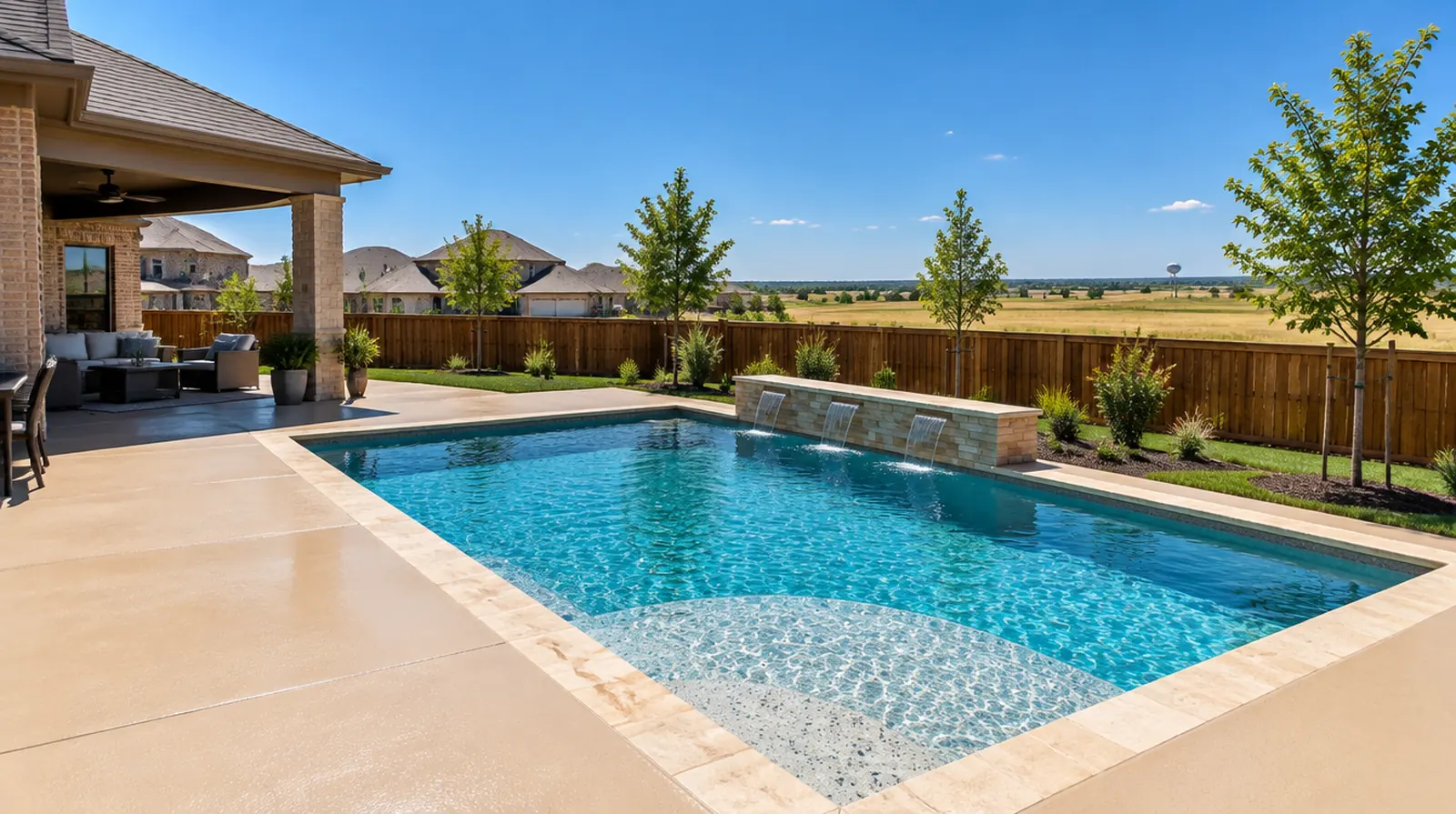
Why outdoor concrete needs protection
Outdoor concrete here faces intense summer sun, sudden storms, sprinkler overspray and pool chemicals. Without protection, it absorbs water and stains, fades and slowly erodes at the surface. Sprinklers fed by hard water can leave white mineral deposits and orange rust spots. A quality sealer reduces water absorption, resists staining and makes cleaning much easier.
Types of sealers
Penetrating sealers soak into the concrete and repel water without changing its appearance. They are ideal for plain broom-finished patios, walkways and pool decks where traction matters. Film-forming acrylic sealers create a surface layer that enhances color and adds a wet look, which many homeowners like on stamped or stained concrete. Urethane and polyaspartic sealers are tougher options for heavy use. We recommend a product based on the surface, the look you want and how the area is used.
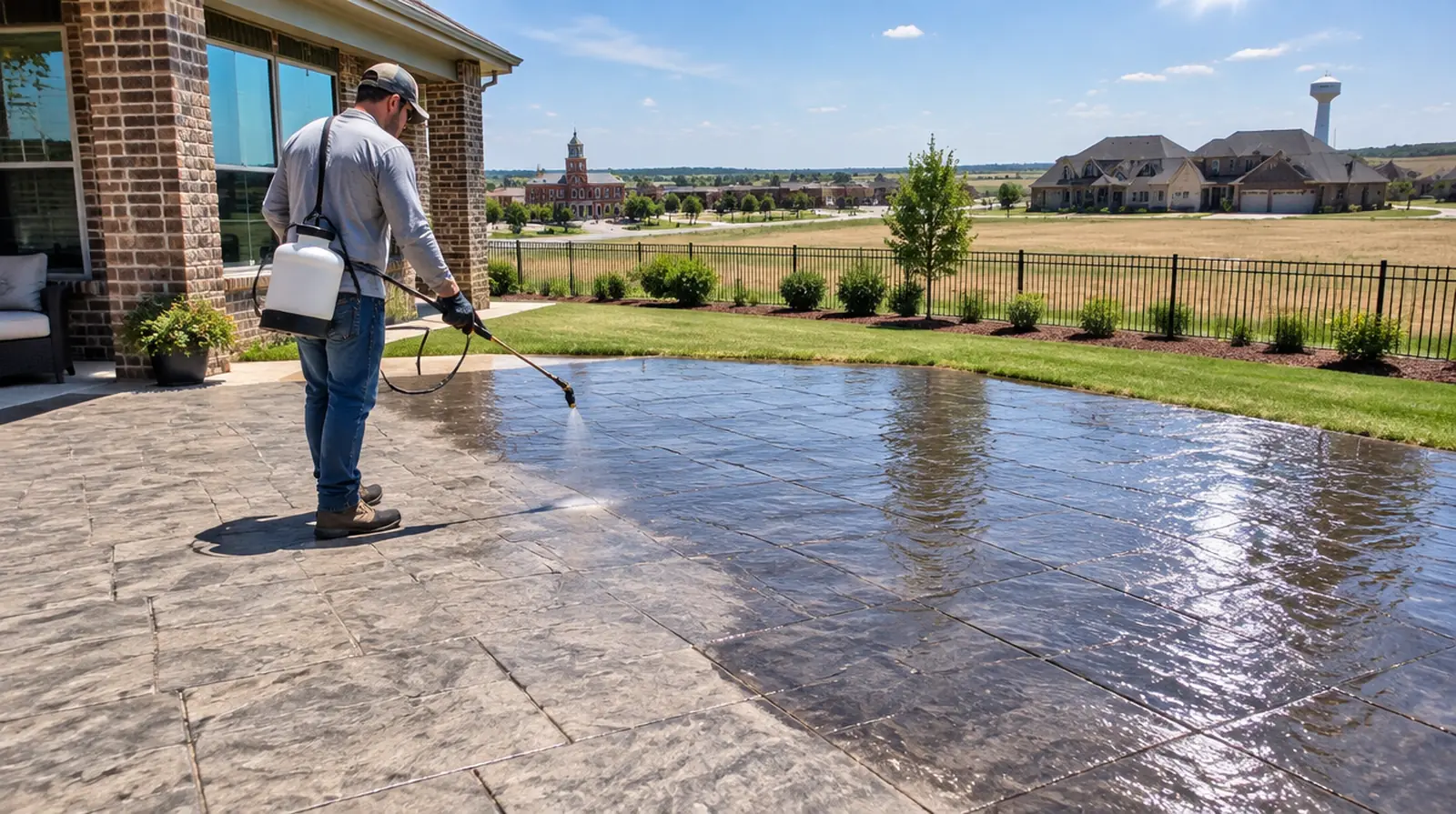
Cleaning comes first
A sealer locks in whatever is on the surface, so we clean thoroughly first. That includes pressure washing, removing mildew and algae, treating rust stains and mineral deposits and degreasing oil spots. Failing or cloudy old sealer is stripped so the new coat bonds properly.
Stamped and decorative concrete
Many newer homes have stamped patios that look like slate, stone or wood. These surfaces fade without regular resealing. We clean, restore color if needed and apply a sealer that enhances the pattern. We can add a slip-resistant additive so the patio is not slick when wet.
Pool decks
Pool decks need a sealer that tolerates chlorinated or salt water, stays comfortable underfoot and provides grip. We use breathable products that will not trap moisture and cause whitening, and we add texture where needed.
Cracks and joints
Shifting clay soil often cracks patios and walkways. We fill cracks and joints with flexible sealants that keep water out of the subgrade, which helps slow further movement. We also explain when a crack indicates a larger problem.
Timing
Sealers need dry concrete and suitable temperatures. In summer, we work in the morning to avoid surfaces that are too hot. We watch forecasts for rain and give the sealer time to cure before sprinklers run.
How often to reseal
Penetrating sealers typically last several years. Acrylic sealers on stamped concrete generally need refreshing every two to three years, depending on sun exposure. We can set up a schedule so your surfaces stay protected.
Commercial sealing
Storefront walkways, restaurant patios and office entries benefit from sealing too. We schedule work early or after hours to keep entrances accessible.
Pricing
Price depends on area, cleaning and stripping requirements, crack repair and sealer type. Your quote breaks these down clearly.
Care
Sweep regularly, rinse occasionally and clean spills quickly. Adjust sprinklers to reduce overspray onto concrete. Avoid harsh acids that can damage the sealer.
Will sealer make my patio slippery?
We can add slip-resistant additives to prevent that.
Can you remove rust stains?
Most rust stains can be lightened or removed with specialty cleaners.
How long before I can walk on it?
Usually within a few hours; furniture can return the next day.
Protect your concrete
Contact us to get a sealing quote.
Covered patios and outdoor kitchens
Outdoor kitchens see grease, marinade, wine and charcoal ash, and those stains set quickly on porous concrete in hot weather. We use sealers with better oil resistance in grilling areas and recommend a mat under the grill. Under covered patios, where concrete stays shaded and damp longer after storms, we choose breathable products that discourage mildew. We also check how gutters and downspouts drain, since water dumping onto one corner of a patio is a common cause of staining and settling.
New patios
Freshly poured patios should cure for about a month before sealing. We can schedule a return visit so a new slab gets protected before its first summer.
to get a sealing quote.
Call (469) 202-5070 for a free estimate.